
Job Application Tracker Excel Template and Other Free Tools
Discover effective strategies and tools to organize your job search, including Eloovor's free job application tracker Excel template.

Applying for jobs is exhausting right now. The market has shifted, and sending out a few resumes rarely cuts it anymore. When you're applying to dozens of roles a week, they all start to blur together. You forget which resume version you sent, who you spoke with, and when you should follow up. Getting a simple system in place helps you regain control and keep your sanity during the search.
1. The manual way: using a spreadsheet template

Creating a spreadsheet is one of the simplest yet most effective ways to track your job applications. You can use tools like Microsoft Excel, Google Sheets, or other spreadsheet software. Here are the columns you should consider including:
- Company name and the specific role title.
- Date applied, so you know exactly when to follow up.
- Current status, such as applied, interviewing, or rejected.
- Resume version used, since tailoring your profile for each role is key.
- Link to the job description, which often disappears after the posting closes.
- Notes column for details on contacts, recruiters, or interviews.
If you don't want to create this spreadsheet from scratch, you can download Eloovor's free job application tracker Excel template.
Prefer not to maintain the spreadsheet yourself?
Eloovor keeps your tracker updated automatically and tells you which applications deserve your time.
2. Automating with job tracking apps
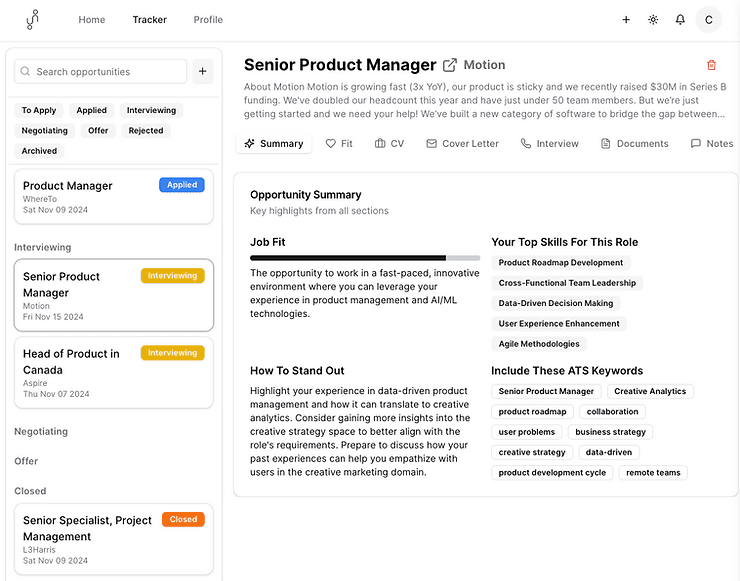
Spreadsheets work well, but updating them manually takes effort. If you want something that does the heavy lifting, specialized job tracking apps can help.
- Eloovor: Instead of just listing your applied roles, Eloovor helps you prioritize where to spend your energy. It analyzes your experience against a job description to show you where you actually align, so you don't waste hours on long applications that aren't a good fit. Create a free account to try it on your own search.
- Huntr: A visual Kanban board style tracker that is helpful for seeing your search stages at a glance.
- JobScan: Useful for checking how well your resume matches the job description keywords.
3. Stay accountable to yourself
Searching for a job can feel incredibly isolating, and it's easy to lose track of where you actually stand once you're juggling dozens of applications. Having a system you check in on regularly does the same job a support group would: it keeps you honest about what's working, what's stalling, and what needs a follow-up.
Let your tracker do the accountability for you
Eloovor surfaces stale applications and upcoming deadlines automatically, so nothing quietly falls through the cracks.
4. Set reminders
Missing a follow-up or an interview deadline is a quick way to lose an opportunity. Use your calendar or phone reminders to alert you when to send a polite follow-up email, when to prepare for an upcoming interview, or when a high-interest role closes.
5. Organize your email
Your inbox gets messy fast during a search. Try setting up a dedicated folder or labels for job applications. You can group them by status, like 'applied' or 'interviews scheduled'. Doing this keeps recruiters' emails from getting buried under newsletters or spam.
6. Regularly review your progress
Take an hour at the end of each week to look over your tracker. This helps you notice if certain resumes are getting better response rates, or if you need to adjust your strategy. It's also a good moment to recognize your own hard work, even if the inbox is still quiet.
7. Stay resilient
The search is a marathon, and rejection is part of it. Keeping your tracker updated is not just about staying organized; it's about protecting your energy. Knowing exactly where you stand helps you take breaks when you need them and proceed with confidence.
Organizing your search
A tracker is a tool to serve you, not another chore to stress over. Whether you use a simple Google Sheet or a dedicated app, choose the system that feels easiest to maintain. Let's make the search a little less chaotic.
Still tracking applications in a spreadsheet?
Eloovor does the tracking and the thinking for you. It's free.